

Better care for the elderly evident as rising number of people register for power of attorney
Power of attorney (LPA) is a legal document that can be used to give another person the authority to make health care decisions, financial transactions, or sign legal documents that you may not be able to do for yourself for some reason, giving you peace of mind that someone you trust is in charge of your affairs.
Over 5 million UK residents have a registered lasting power of attorney in place giving them peace of mind that someone they trust is in charge of their affairs. In recent years, there has been a dramatic growth in registrations, reflecting a growing trend towards improved security and care for the elderly.
A high proportion of the UK elderly population are living independently or in care homes, so having power of attorneys in place can bring much-needed reassurance and allow for more informed financial planning.
If you’re aged 18 or older and have the mental capacity to make financial, property, and medical decisions for yourself, you can arrange for someone else to make these decisions for you in the future. The person making the power of attorney is called a donor and the person appointed to act on their behalf is called an attorney.
Powers of attorney may be short term – because you’re in hospital, abroad or you’re finding it harder to get out and about to the bank or post office, and you may need help with everyday tasks such as paying bills, or it may be longer-term – say, if you’ve have been diagnosed with dementia and risk losing your mental capacity to make important decisions.
There are two types of power of attorney and you can set up both:
Ordinary power of attorney
This covers decisions about your financial affairs and is only valid while you have mental capacity to make your own decisions. It is suitable if you need cover for a temporary period (hospital stay or holiday) or if you find it hard to get out, or you want someone to act for you. You can limit the power you give your attorney so that they can only deal with certain assets, for example, your bank account but not your home.
Lasting power of attorney (LPA)
LPAs are used if there comes a time when you don’t have the mental capacity to make your own decisions and you need to ensure you’re covered in the future. There are two types of LPA:
- For financial decisions:
- buying or selling property
- paying the mortgage, investing money & paying bills
- collecting pension or benefits
- For health and care decisions:
- your medical care
- moving into a care home
- your daily routine – washing, dressing, eating
- life-saving treatment
Setting up an LPA is set to get easier
The Office of the Public Guardian is responsible for processing LPA applications. Due to rising demand and Covid-related labour shortages, it currently takes around 20 weeks for an LPA to be processed. The current system is mainly paper-based. However, this could change in the near future as the government is now reviewing how to simplify the application process online.
Enduring power of attorney (EPAs) were replaced by LPAs in October 2007. However, if you made and signed an EPA before then, it should still be valid.
If you want to set up an ordinary power of attorney you should contact your local Citizen’s Advice or get advice from a solicitor. For help deciding if you should make a lasting power of attorney, contact the Office of the Public Guardian – customerservices@publicguardian.gov.uk or telephone 0300 456 0300.
Click here to read seven steps to take when writing a will.
Other articles you may like
- Gluten free chocolate cakes
 Gluten free chocolate cakes There’s nothing better than chocolate for a sweet treat, and these gluten free chocolate cakesContinue reading “Gluten free chocolate cakes”
 - How can we manage stress to promote wellbeing?
 We all know what it’s like to feel stressed, and we all have certain triggers. Whether it’s a deadline at work, a missed flight, or a new social situation, stress is a natural part of life. But as we get older, these stress triggers can change. Our health, and the health of our loved ones, becomes a more prominent source of stress, especially as this is something out of our control. On top of that, there’s the possible move into a care home, which can be a hard transition to navigate. At Birchwood House, we want to recognise the impact stress can have on our wellbeing, whilst using gentle, effective ways to reduce anxiety. So, what are some of the ways we manage stress to promote wellbeing?
 - National Hot Tea Month: why do we like tea so much?
 January is National Hot Tea Month, and there is nothing better than a good cup of tea. It’s one of life’s small pleasures, and it’s a daily routine for many, including for us at Birchwood House! Tea is also rooted in long-standing tradition and cultural significance. Legend says that tea was discovered by Emperor Shen Nung all the way back in 2732 BC, when leaves from a wild tree accidentally blew into his pot of boiling water. Tea came to Europe in the early 1600s, and we’ve been drinking it ever since. To celebrate National Hot Tea Month, here are some of our favourite reasons why we drink it!
 - Vegetarian Suet Roulade
 New year, new recipes! This month, Chef John aced his homemade vegetarian suet roulade. This is the perfect hearty winter meal, with roasted veg packed with soft suet pastry. We’ve paired this with mash, braised cabbage and vegetarian gravy, but it also goes great with a cheese sauce.
 - Christmas crafts
 Merry Christmas! This month is filled with festive fun for our residents, which means all sorts of Christmas crafts to get involved with. And these activities are suitable for anyone; crafting is a great way to boost mood, stimulate our brains, and make memories with those around us. We’re sharing a run-down of how we’ve been making the most of this holiday season – use it as inspiration and show us anything you make!
 - Clementine Panna Cotta
 Clementine Panna Cotta This dessert has been going down a treat with our residents! Inspired by taste buds, thisContinue reading “Clementine Panna Cotta”
 - Gentle exercises for older adults
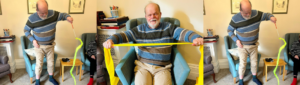 When we get older, finding ways to move our body can get harder. But that doesn’t mean it’s impossible! Using low-impact, gentle exercise is a great way to stay active without putting too much strain on ourselves. Regular movement is important for a number of reasons, not to mention the physical and mental health benefits. A recent report by Care England even showed that regular physical activity is improving the health, confidence, and wellbeing of residents in care homes, and could even deliver savings of up to £96 million to the NHS.
 - Mediterranean Roasted Chicken Breasts
 This is a dish packed with flavour and spice. The chicken is filled with amino acids to support muscle growth and brain function, whilst the vegetables are rich in fibre and antioxidants. Both warming and filling, we’ve taken inspiration from The Cafe Sucre Farine to make this healthy, easy dinner.
 - How did our residents celebrate National Baking Week?
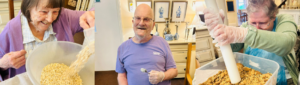 Happy National Baking Week! From Monday (October 13th) to Sunday (October 19th), we’re celebrating the joy and benefits of baking. Because, as you may have already seen on our Facebook, baking is a firm favourite at Birchwood House. Whether it’s sweet treats or savoury goods, we make sure baking is a regular activity. There are always recipes to try, techniques to learn, and opportunities to discover something new.