
Gentle exercises for older adults
When we get older, finding ways to move our body can get harder. But that doesn’t mean it’s impossible! Using low-impact, gentle exercises for older adults is a great way to stay active without putting too much strain on ourselves.
Regular movement is important for a number of reasons, not to mention the physical and mental health benefits. A recent report by Care England even showed that regular physical activity is improving the health, confidence, and wellbeing of residents in care homes, and could even deliver savings of up to £96 million to the NHS.
So, why should you exercise? And how should you do it?
It’s highly recommended that you consult a medical professional, or your local GP, before starting new exercise regimens as an older adult. However, we’ve got some basic tips to get you started:
Why is exercise for older adults important?
Movement is not only for fitness, but for finding purpose, joy and fun. It can be done by yourself or as part of a social activity with friends, and there’s always alternative exercises so you can make movement right for you.
It’s a common misconception that adults don’t need to move as much as they age. If anything, movement in your older years is important more than ever. It’s essential for independence and preserving muscle mass, which ultimately lowers the risk of falls. It benefits your immune system, reducing inflammation and helping immune cell function.
But aside from the physical benefits, an exercise routine helps with overall routine. It sets the tone for the day, and gives us a reason to get up. Whether this is a walk outside, chair yoga, or some simple stretches, exercise gives us the sense of purpose that boosts our mental health and self-esteem.
What exercise could you do?
Any form of movement counts as light activity. This means that walking around the home, cleaning, and making the bed all count towards your daily exercise routine. Simple, household tasks can strengthen our muscles without us even realising, such as carrying heavy shopping bags and gardening.
Also, not all exercises need to be performed standing. There’s chair yoga, with a variety of different stretches, or chair-based marching, where you sit upright and lift one knee at a time in a marching motion. You can also do a seated side bend, lifting one arm overhead and gently leaning to the opposite side for 10 seconds.
For standing but low-impact exercises, you can use resistance bands to strengthen muscles. Wall push-ups are also great for safely building upper body strength, whilst stretching your neck, shoulder and hamstring aids flexibility. A great way to help coordination and balance is a ‘heel to toe’ walk, where you practice walking in a straight line, placing your heel on one foot to the toes of your other.
What exercise does Birchwood House do?
We want all residents to feel healthy and supported in our home, so all our exercises are led by them! Whether it’s walking or chair-based, we choose movement in a way that feels fun and accessible.
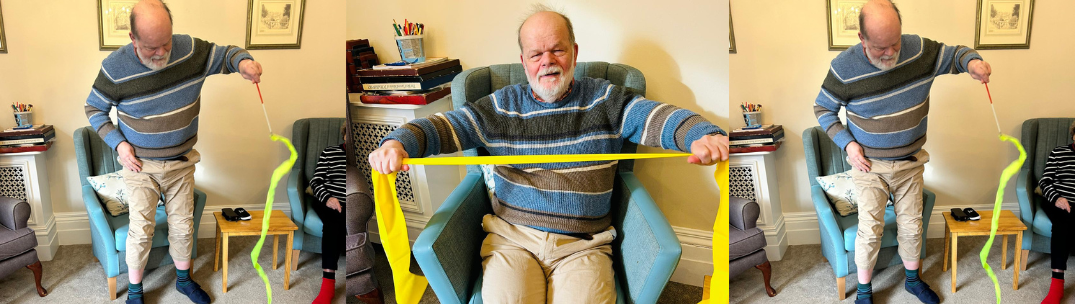
We regularly hold movement classes, and a recent one was our ribbon dancing. This gently engages the whole body, helping with posture, balance and coordination. By encouraging slow, flowing motions, we can reduce stiffness which helps joint mobility and flexibility.
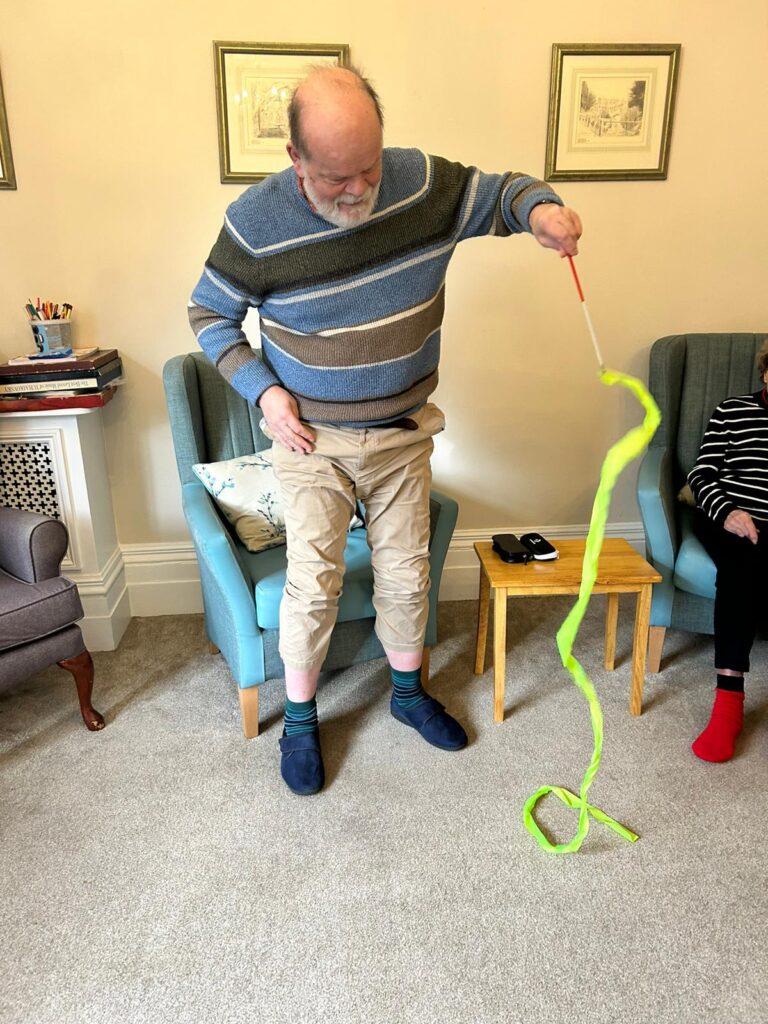
Activities like this are adaptable to several different needs, and can be done sitting or standing. Using different colours or materials also promotes creativity and mindfulness, and it’s a way to express yourself through light dance.
We also run regular movement classes with local fitness legend Sarah Domoney. Sarah works with older adults across Tunbridge Wells, helping them feel strong, empowered and independent.
If you or someone you love is looking to move more, and would like help with gentle, low-impact exercises, please get in touch.